Who Actually Decides Whether the O'Hare Flyer Runs Through River Forest
October 29, 2026
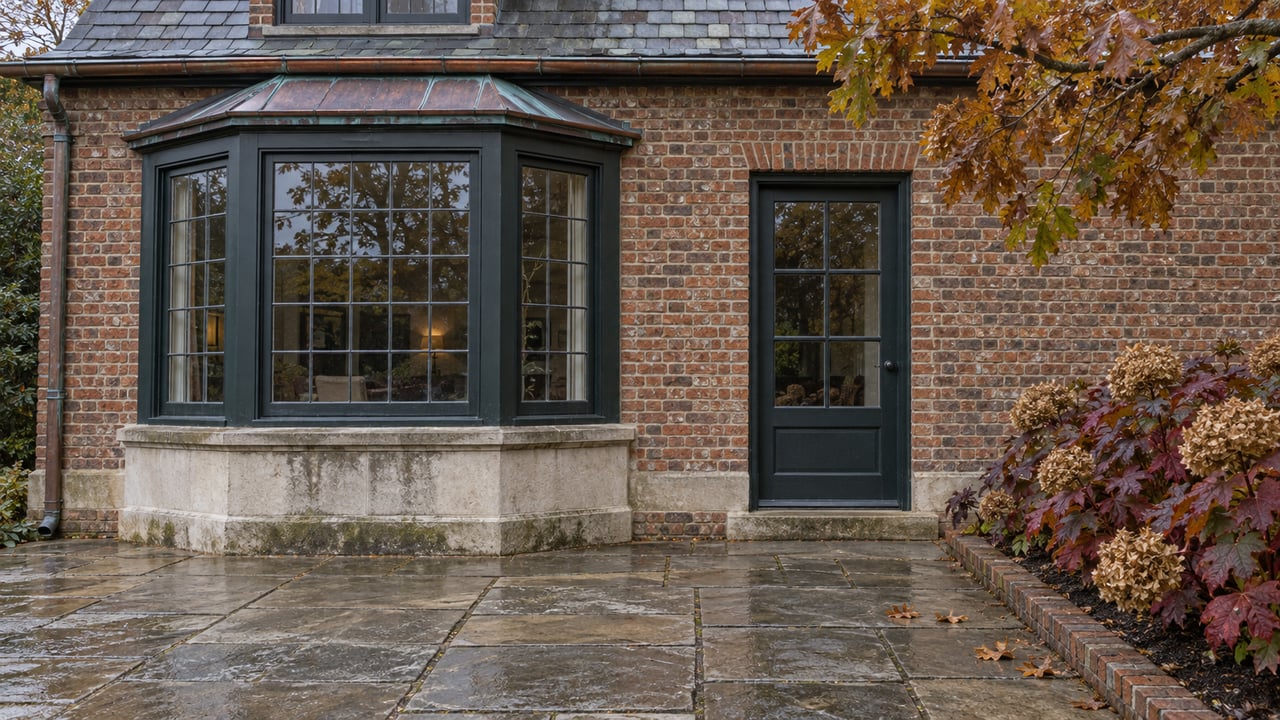
If you're looking at homes on the east side of River Forest, the rail line between Forest and Park avenues hardly looks like a railroad. A Trains.com report from October 3 ran a photo of the Canadian National tracks there with tree branches hanging over the rail and said the line currently sees about one train a year. A buyer walking that block could easily take the track for a green strip.
It is a railroad right-of-way, though, and a private company wants to run trains on it every 15 minutes. The proposed O'Hare Flyer is a battery-powered express train between downtown Chicago and O'Hare. It would run from 4 a.m. to 10 p.m. at around 80 mph on or next to existing rail lines, at an estimated cost of $2.25 billion, according to Wednesday Journal. River Forest's Village Board has already voted against it. That vote is real, but the decisions that will settle the project are being made by railroads and federal agencies. If you're comparing blocks near the line this fall, those are the milestones that matter.
Wednesday Journal described the route in its September 1 report. The line comes into River Forest on a curve parallel to Van Buren Street between Forest and Park avenues. From there it "would continue north between Forest and Park avenues over Chicago Avenue, Iowa Street, Augusta Street and Thatcher Avenue before proceeding to O'Hare through Thatcher Woods."
The Village gave a sense of how many homes are involved in its September 28 letter to the Flyer's CEO, Dave Lundy. The letter asks for safety, noise, environmental and quality-of-life plans for "the 200 homes located 50 feet from the tracks." It also asks about effects on the more than 700 homes near the tracks. It names grade crossings at Madison Street, First Avenue and Fifth Avenue, and it lists access to the Gottlieb Memorial Hospital trauma center among its traffic concerns.
The gap is large. Today the line carries about one train a year. If the Flyer runs as proposed, the advocacy group S.T.O.P. (Stop the O'Hare Passthrough) says the developers confirmed a train would pass any point roughly every seven and a half minutes, which works out to about 144 trains a day. S.T.O.P. also says the River Forest segment would sit on a 15-foot berm inside a 66-foot right-of-way. These are the group's accounts of what the developers said, and the project hasn't published drawings that confirm them.
River Forest moved fast. On September 14, more than 100 people filled the Fox Auditorium at Trinity High School. Twenty people spoke against the proposal, one spoke in favor, and the board unanimously passed a resolution opposing the Flyer. The resolution asks the sponsors to "cease advancing their plans and explore alternative route options." It also asks state and federal officials, including Senate President Don Harmon and House Speaker Chris Welch, not to take any action that would allow the project to go forward.
The resolution's wording shows where the Village's leverage lies. It asks other people to act: the developers, state lawmakers and federal officials. After the vote, the Village's October 2 e-news announced three hires: Jasculca Terman Strategic Communications for communications, Prescott Group for government relations, and Daniel Elliott of GKG Law for legal work. The Village said it "will continue to formally object throughout the review process." GKG Law's biography says Elliott chaired the Surface Transportation Board during both of his appointed terms, through January 2017. That hire points to the federal rail regulator as the venue the Village expects to matter most.
The Flyer's own team lists the same set of approvers. In the October 2 webinar Trains.com covered, co-founder Mark Walbrun said:
"There's a requirement to go through the Surface Transportation Board for various aspects of the new service. There's a requirement for the Federal Aviation Administration to approve the changes at the airport through the Airport Layout Plan program."
He also said the company has to work with the Federal Railroad Administration to qualify the operator, Herzog, and the track layout. Communities come up in his account mainly when he talks about the remaining grade crossings and what each town would like done with them.
The project's pace depends on agreements that haven't been signed yet. Lundy describes it as "functionally an 18-mile track rehabilitation project." He says bridge repairs would start in 2027 and major construction would follow in 2028 and 2029, once the railroad agreements are in place. Here is where each piece stood as of the most recent reports:
| Milestone | Status as of late October 2026 |
|---|---|
| CSX agreement | A letter of intent is in place. It is the only railroad agreement in place so far, and S.T.O.P. points out that a letter of intent is not a contract. |
| Canadian National agreement, covering the River Forest tracks | Not signed. The founders expect definitive agreements "over the course of the next few months." |
| Union Pacific agreement | Not signed |
| Surface Transportation Board filing | S.T.O.P. says no route has been filed. |
| Noise, vibration and traffic studies | S.T.O.P. says none has been done. The developers have said they would welcome an independent noise and vibration study, but none is scheduled. |
| Public funding | The Flyer says it is privately funded and isn't seeking government subsidies. |
The Canadian National row matters most for River Forest. CN owns the tracks behind those 200 homes. According to S.T.O.P., the developers said on October 1 that CN had "indicated that there was a reasonable possibility" of leasing a track. That is a long way from a lease, and a signed lease would change the outlook on those blocks more than any village meeting could.
The Flyer's September 14 letter promises to eliminate "all four grade crossings in River Forest" but doesn't say which crossings it means. The Village's reply turned the open issues into a list. Before any presentation, it wants:
The Village also declined to have the Flyer make a stand-alone presentation to its board in October. It asked for one regional meeting in a central location with every community along the route. As of the latest reporting, no date or venue for that meeting had been announced.
The towns along the corridor are taking different positions, and that will shape how the regional fight plays out. Forest Park hosted the first community meeting on October 1, and more than 150 people came. The Forest Park Review reported that Mayor Rory Hoskins has promoted a possible station there, and that Lundy called Forest Park "the only site we're considering" without making a formal commitment. Melrose Park Mayor Ron Serpico sent Lundy a letter opposing the project as proposed. So did Cook County Commissioner Maggie Trevor and the West Central Municipal Conference. In Oak Park, Trustee Jim Taglia wrote an opinion piece against it, but the Oak Park Village Board hadn't taken a formal position.
At the state level, Harmon's public position is still the statement he gave early on: "While I appreciate the significant positive impact this project could have on Chicagoland, I'd like to hear from my neighbors who will be most directly impacted." Oak Park Wire reported that Speaker Welch joined an October 3 conversation with River Forest residents but didn't state a position. At that meeting, according to Wednesday Journal, Village President Cathy Adduci pointed to the recently passed state transit bill and Cross Rail Chicago's study of more frequent Metra service as alternatives.
There's no announcement to wait for that would settle this. The proposal is about two months old. The one railroad agreement in hand covers CSX track rather than the River Forest segment, and S.T.O.P. says no route has been filed. On the developers' own schedule, bridge repairs would start in 2027 and major construction in 2028 and 2029, and that schedule depends on contracts that don't exist yet. Over the next few months, buyers will be making offers on homes near the line without knowing how this ends.
So pay attention to the documents more than the meetings. The steps that would actually move the project are a signed CN lease, a filing with the Surface Transportation Board, and a published noise or vibration study. The Village's O'Hare Flyer page collects its letters, the resolution and updates, and it is the first thing to check during a contract period. S.T.O.P.'s calendar listed the River Forest Village Board meeting on October 26, an information table at the Oak Park Farmers' Market on October 31, and the Franklin Park board meeting on November 2. If a home you're considering sits close to the line, knowing exactly which crossing and which block you're near will help when those details are finally published.
Is the O'Hare Flyer approved? No. As of late October 2026, only the CSX letter of intent is in place. The Canadian National and Union Pacific agreements are still open, and federal approvals are still ahead.
Would there be a station in River Forest? The only station site that has been discussed is in Forest Park, and it isn't a formal commitment.
Which River Forest crossings would close or be separated? The Flyer has promised to eliminate four grade crossings in River Forest but hasn't named them. The Village has asked for a crossing-by-crossing answer.
If you're weighing a home near the Forest and Park corridor and want help reading a listing against the latest filings and Village updates, Zachary Knebel and the ZK Group team are following the O'Hare Flyer closely. We can walk through the specific block with you. Schedule a Consultation.
Stay up to date on the latest real estate trends.
From the first consultation to closing, we are with you every step of the way. With deep local market knowledge, transparent communication, and an unwavering commitment to excellence.