River Forest Architecture And Home Styles Guide
May 21, 2026
May 21, 2026
If you have toured homes in River Forest, you have probably noticed something right away: this is not a place where every block looks the same. One street may feature a low, horizontal Prairie home, while the next has a stately Colonial Revival or a steep-roof Tudor. If you are trying to buy, sell, or simply understand the market here, knowing the local architecture can help you make better sense of what you are seeing. Let’s dive in.
River Forest has a layered housing story because it is an older village that is largely built out. The village’s Comprehensive Plan notes that single-family residential areas are the largest land use and that there is very little opportunity for new single-family development except when an existing home is replaced.
That matters because it helps explain why the local housing stock feels varied rather than newly uniform. Instead of large waves of brand-new subdivision construction, River Forest reflects decades of homebuilding across different eras, styles, and design trends.
The village is especially known for Victorian and 20th-century period-revival homes, along with Prairie, Craftsman, and Mid-Century Modern architecture. Mature trees, expansive lawns, and older lot patterns add to that established look and feel.
If you are house hunting in River Forest, there are a few architectural styles you are especially likely to see. Some are tied to the village’s earliest growth, while others reflect major design shifts from the early 1900s through the postwar period.
Some of River Forest’s oldest homes date to the late 19th century. These include Italianate and Queen Anne forms, which often stand out immediately from the street.
Italianate homes are typically two to three stories with decorative roofline cornices, tall narrow windows, and detailed porches. Queen Anne homes tend to be more asymmetrical, with steep roofs, prominent porches, towers, or patterned shingles.
When you see these homes, you are often looking at some of the oldest layers of River Forest’s built environment. They can offer a lot of character, but they also tend to have very distinct exterior details that buyers and sellers should understand and appreciate.
Prairie architecture is one of River Forest’s signature styles. That is partly because of the area’s connection to Frank Lloyd Wright and the broader Prairie School tradition.
These homes are usually low and horizontal in appearance. Look for wide eaves, deep overhangs, bands of windows, and porches that feel integrated into the overall design rather than added on as a separate element.
Prairie homes often feel calm, grounded, and highly intentional. In River Forest, they are an important part of the village’s architectural identity and a major reason many buyers are drawn to the area.
River Forest also has a large number of Foursquares. In fact, the village survey notes more than 320 of them, making this one of the most common home forms you will encounter.
A Foursquare is usually a square or rectangular two-and-a-half-story home with a hip roof, dormers, and a full front porch. In River Forest, many include Prairie, Craftsman, or Colonial Revival details, so they can vary quite a bit even when the overall shape is similar.
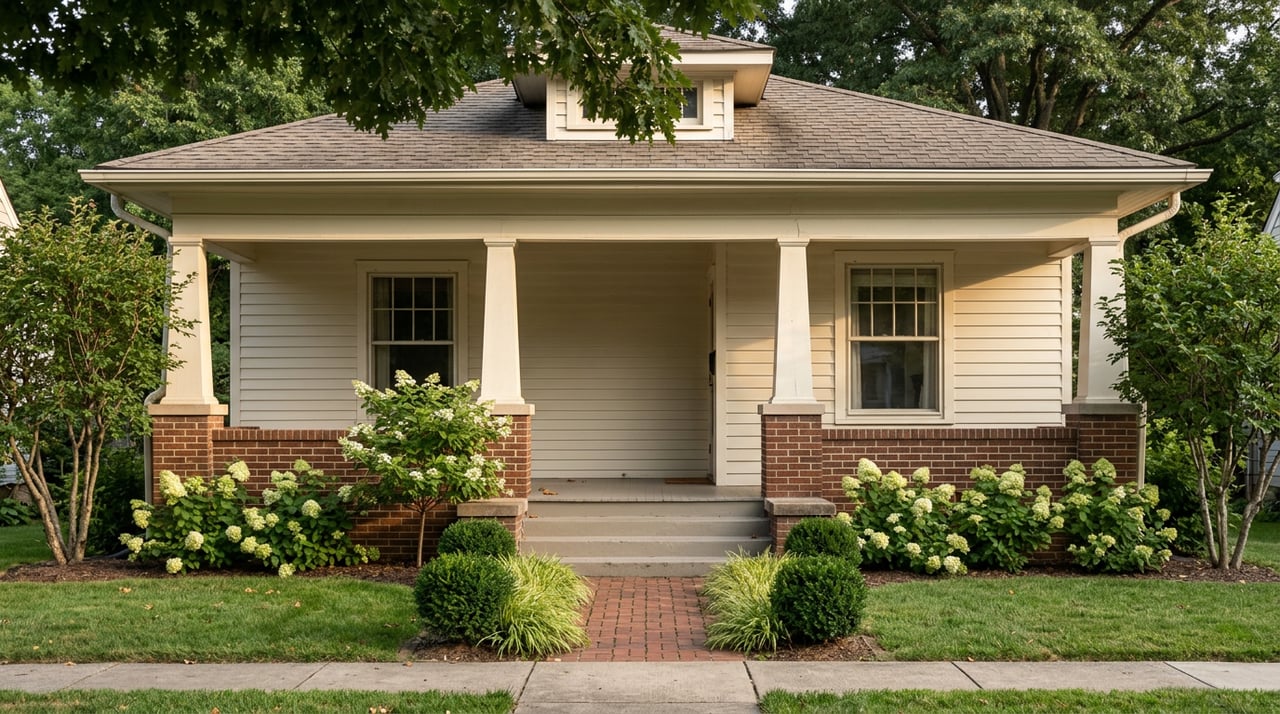
Chicago Bungalows are another style buyers may see. These are generally one to one-and-a-half-story brick homes with compact plans and low rooflines, often designed to fit narrower lots.
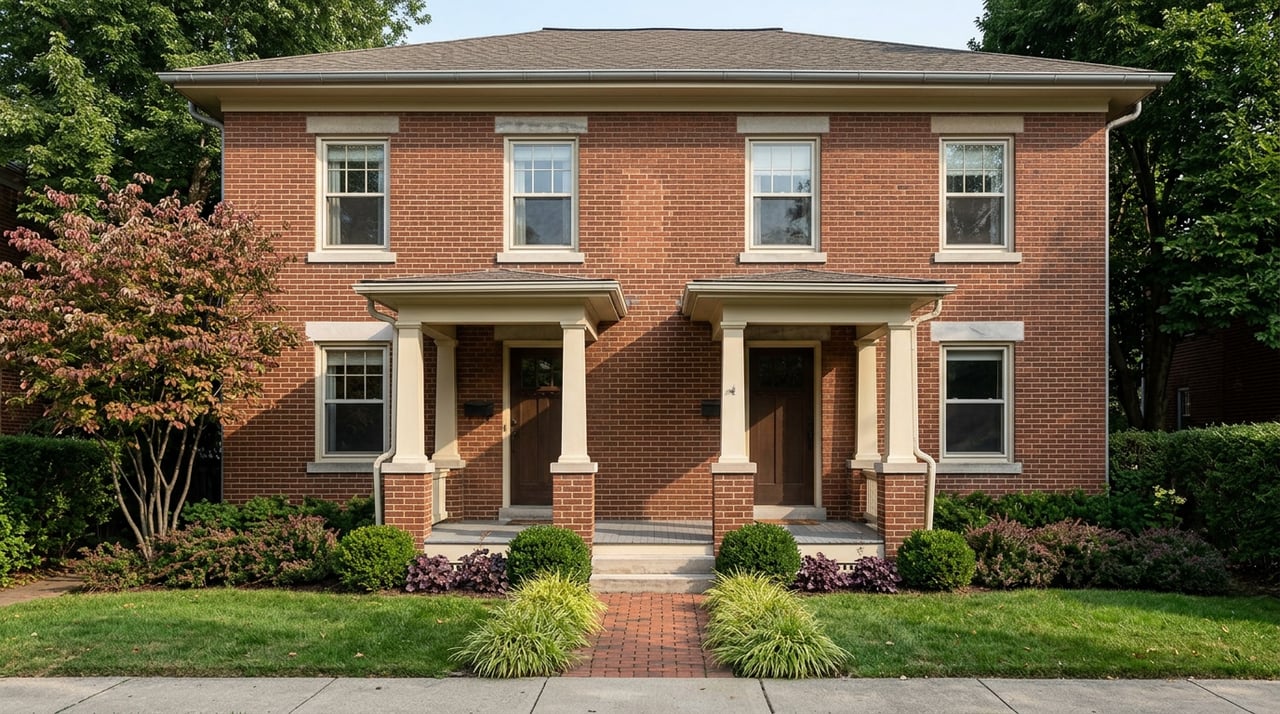
Colonial Revival is the most prevalent style in River Forest according to the village survey. If you spend any time touring homes here, you will likely notice how often symmetry, masonry exteriors, and formal entry details show up.
Local examples often include two-and-a-half-story brick or stone homes with symmetrical facades, columned porches, multi-pane windows, and hipped roofs. Dutch Colonial versions are also part of the mix and bring their own recognizable variations.
For many buyers, Colonial Revival homes strike a balance between traditional curb appeal and practical layout potential. For sellers, these homes often benefit from strong visual recognition because the style is so well established in the village.
After the Prairie School period declined, French Eclectic homes became more popular in River Forest. These homes are typically brick or stone with steep, asymmetrical roofs, massive chimneys, and tower-like bays.
They tend to have a romantic, storybook quality from the exterior. In a market like River Forest, they add another layer to the village’s broad architectural mix.
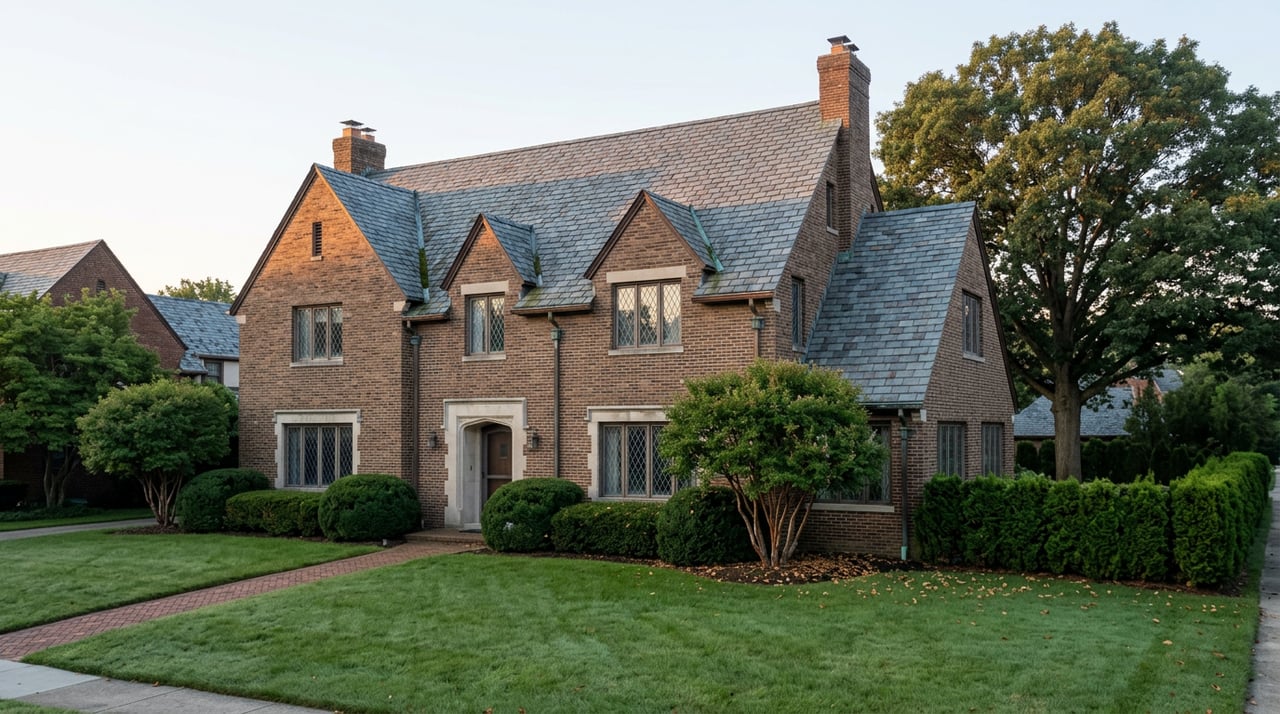
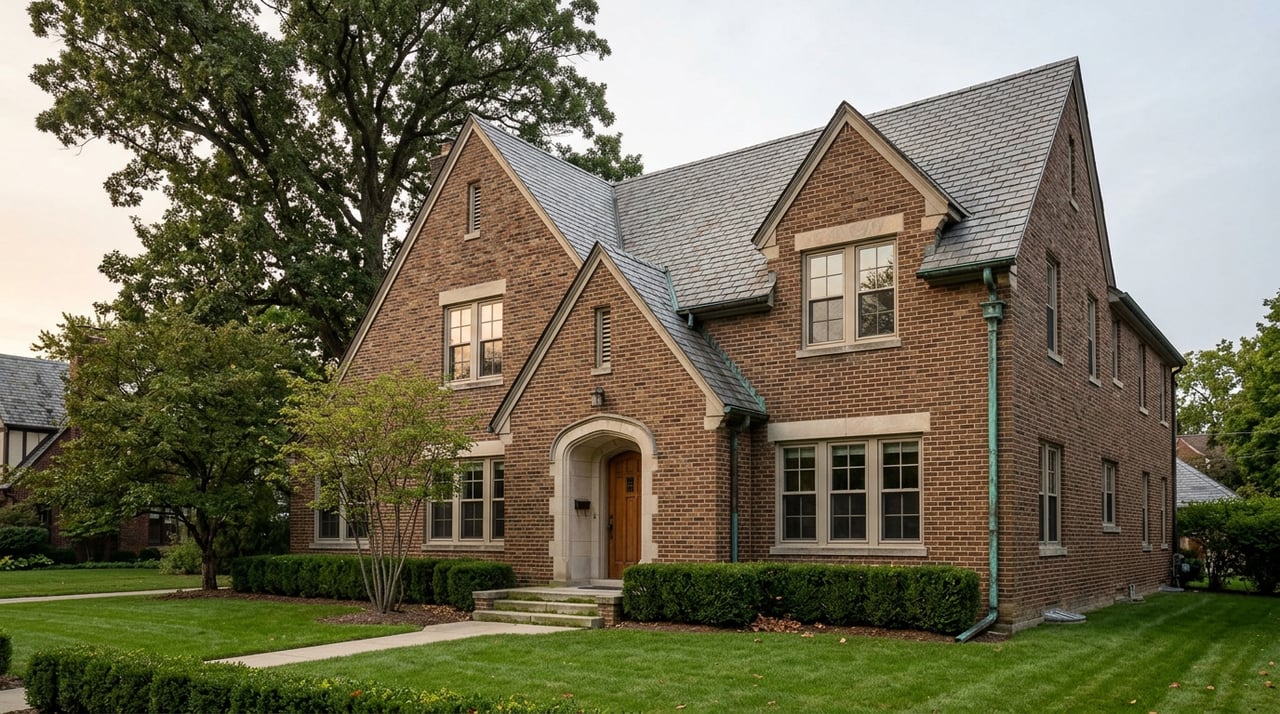
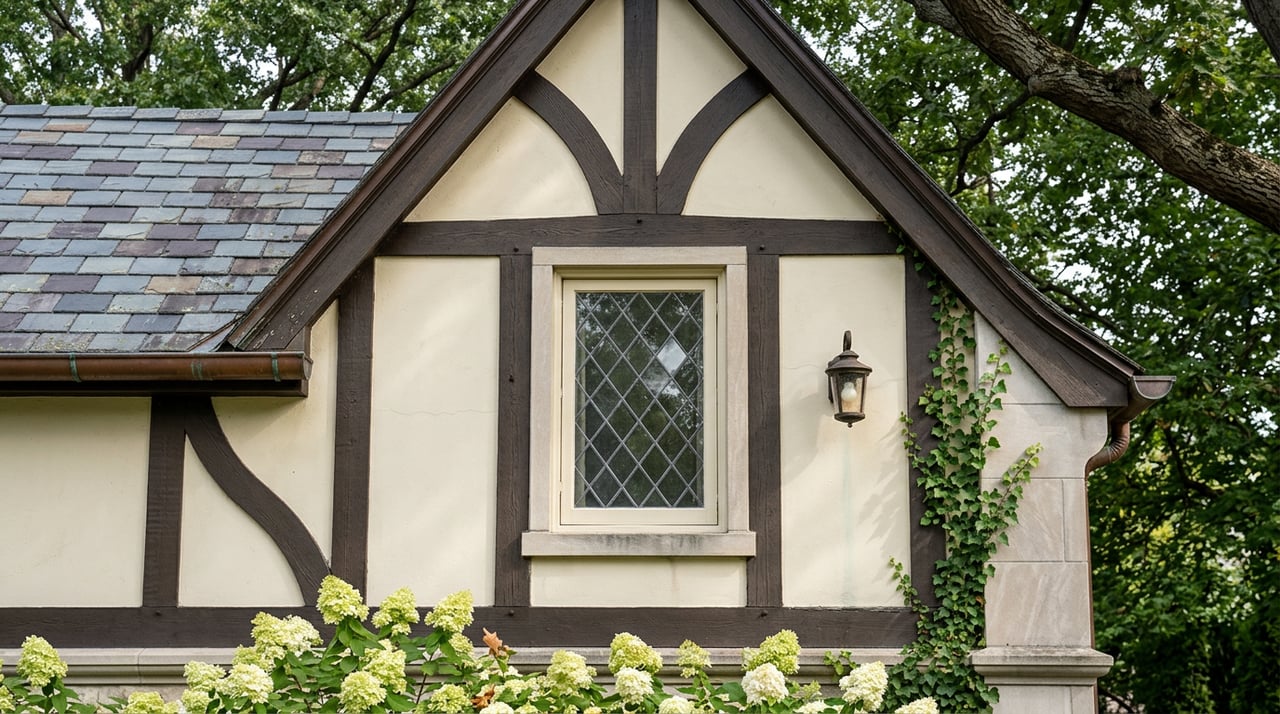
River Forest has more than 230 Tudor Revival homes, according to the survey. That makes Tudor one of the village’s most recognizable styles.
You can usually spot a Tudor by its steeply pitched roof, dominant front gables, half-timbering, masonry walls, large chimney, and narrow casement windows. These homes often have strong curb presence and a distinct period feel.
Because Tudor homes are so visually specific, buyers often respond to them emotionally. Sellers of these homes can also benefit from marketing that clearly highlights preserved original character and thoughtful updates.
River Forest is not only about early 20th-century architecture. The village also has a meaningful postwar housing layer, including more than 200 Ranch homes and 14 Split-Level Ranch homes identified in the survey.
These homes are generally lower-slung and more casual in form. Some Ranch homes echo Colonial, Tudor, or French Revival details, while others have a more clearly modern look.
Mid-Century Modern examples bring cleaner wall planes, lower roof slopes, and larger window compositions. For buyers who want a different architectural feel from the village’s older traditional homes, this part of the housing stock can be especially appealing.
Architecture is only part of the story. River Forest’s zoning and lot standards also help explain why the village looks and feels the way it does.
The village includes wide-lot single-family areas in R1 and single-family detached areas across much of R2. Along Lake Street and Harlem Avenue, R3 supports attached single-family homes and R4 supports multi-family uses.
In R1, newer recorded lots must be at least 15,500 square feet and 85 feet wide throughout their depth, while older recorded plat lots can be smaller. In R2, the minimum lot area is 8,712 square feet, with lot width based on the block average and generally between 50 and 70 feet.
In practical terms, these rules help create the familiar pattern of front lawns, side yards, and detached rear garages. That helps explain why many River Forest homes feel spacious on their sites, even though the architectural styles vary widely.
River Forest also has a strong preservation framework. The local historic district covers roughly 860 properties, and the Historic Preservation Commission has designated 298 homes as Significant Properties.
If a property is designated this way, certain exterior work may require review before permits are issued. That can include work affecting more than 20% of a street-facing facade or window replacement that is visible from the street.
For buyers, this is important to understand before planning exterior changes. For sellers, it can be helpful to know how designation may shape buyer questions, renovation history, and property presentation.
River Forest’s architecture is not just visually interesting. It also connects to how buyers shop and how homes are positioned in the market.
Public pricing snapshots show a wide value range. The village’s 2023 public-data profile lists a median home value of $676,900, Zillow shows an average home value of $739,742 as of April 30, 2026, Redfin reported a March 2026 median sale price of $526,000, and Realtor.com showed a median listing home price of $630,000 with 40 active homes and a median price per square foot of $330.
Those figures measure different things, so they do not match exactly. Still, together they show a market with broad variety in both housing type and price point.
Current public listings reinforce that range. Condos and townhomes can be found below $500,000, while larger single-family homes are listed in the high six figures, well over $1 million, and in some cases above $2 million.
That spread makes architectural context even more useful. A buyer comparing a condo, a brick Colonial Revival, and a Mid-Century Ranch is not just comparing square footage. You are also comparing style, lot pattern, maintenance profile, and how a home fits into River Forest’s older built landscape.
When you are touring homes, it helps to know a few key terms. They can make listing descriptions, showing conversations, and your own decision-making much easier.
In a place like River Forest, two homes with similar price tags can offer very different experiences. One may be a formally symmetrical Colonial Revival on a broad lot, while another may be a Prairie-influenced Foursquare or a postwar Ranch with a very different layout and upkeep profile.
That is why local, architecture-aware guidance can make such a difference. Understanding style, lot context, preservation considerations, and current buyer demand helps you evaluate homes more clearly and position a property more effectively when it is time to sell.
If you are thinking about buying or selling in River Forest, working with a team that knows the local housing stock block by block can save time and reduce guesswork. For tailored guidance on River Forest homes, architecture, and pricing, connect with Zak Knebel | ZK Group.
Stay up to date on the latest real estate trends.
From the first consultation to closing, we are with you every step of the way. With deep local market knowledge, transparent communication, and an unwavering commitment to excellence.