The Zoning Vote That Could Change What's Buildable on Every Oak Park Block
August 27, 2026
August 27, 2026
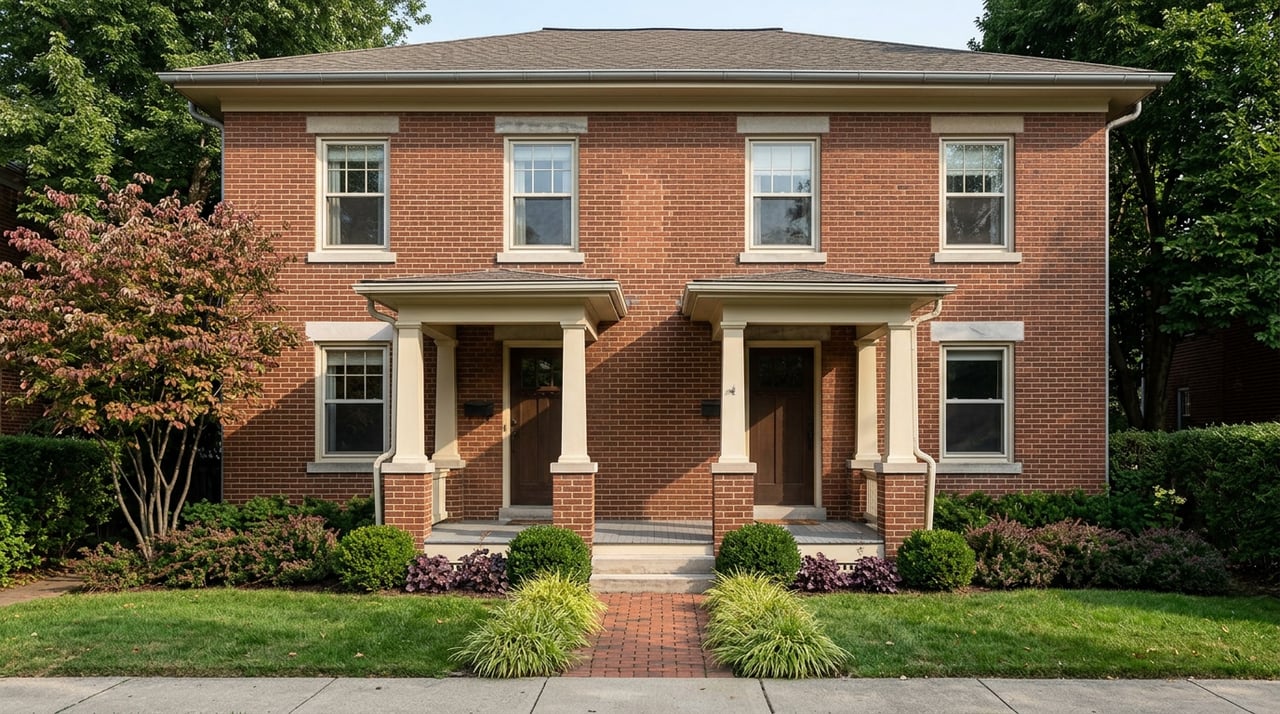
A buyer touring Oak Park this summer sees two separate markets. On one side, a $595,000 Foursquare on a quiet side street, the kind of single-family home the village is known for. On the other, a two-flat a few blocks over, listed in the mid-$400,000s, with a tenant already in place upstairs. Different price points, different buyer pools, different financing conversations with the lender.
That separation is the assumption worth checking before you write an offer, because Oak Park's Village Board just took a real step toward erasing it for future construction.
On July 28, 2026, the Village Board voted to send the "Shape Oak Park" zoning proposal to the Plan Commission for review. The project, developed with consultant Opticos Design, would eliminate single-family-only zoning across most of the village. Right now Oak Park's code splits residential land into eight districts, and five of those permit nothing but a single detached house per lot. The proposal collapses the village's 21 zoning districts overall into 13, replacing the current patchwork with three residential categories, Neighborhood 1, 2, and 3, plus three mixed-use categories built for the village's commercial corridors.
Under the draft rules, a typical residential lot would be allowed to hold up to four dwelling units by right, with no special approval required. Larger lots, generally at least 50 feet wide and 125 feet deep, could go up to six units in the N-2 and N-3 categories. Vehicle parking minimums would drop to zero village-wide, which the village will need to do anyway once Illinois's People Over Parking Act takes effect statewide on June 1, 2026.
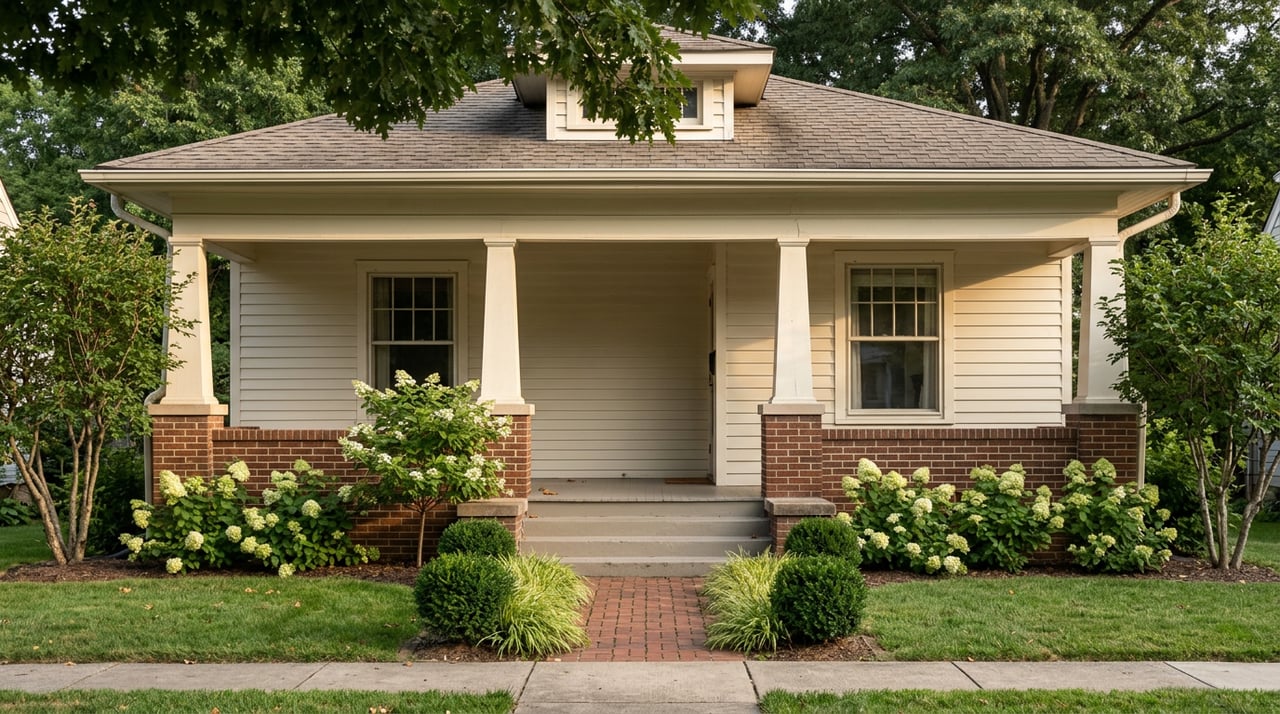
None of this touches the house that's already there. A Craftsman, a Foursquare, a Prairie-style home stays exactly as legal the day after adoption as it was the day before. What changes is the lot next door, or across the alley, or down the block: land that today can only ever hold one house could legally hold a two-flat, a triplex, or a small fourplex once this passes.
That's the mechanism buyers should understand. It isn't about your house. It's about every other lot around it.
Here's the part that surprises most buyers: a two- to four-unit purchase in Oak Park is already more accessible than the sticker price suggests, separate from anything the Plan Commission decides.
FHA loan limits scale with unit count, and Illinois is a single loan-limit state for one-unit properties but not for multi-unit ones. For 2026, the FHA limit for a single-family home is $541,287. For a two-unit property it jumps to $693,050. A three-unit property carries a $837,700 ceiling, and a four-unit property can go as high as $1,041,125. A qualifying buyer with a credit score of 580 or better can put down as little as 3.5 percent on any of those, whether it's a single house or a fourplex, as long as they occupy one unit as their primary residence.
| Property type | 2026 FHA loan limit | Minimum down payment |
|---|---|---|
| Single-family (1 unit) | $541,287 | 3.5% |
| Two-unit | $693,050 | 3.5% |
| Three-unit | $837,700 | 3.5% |
| Four-unit | $1,041,125 | 3.5% |
Limits apply for owner-occupant borrowers with qualifying credit; three- and four-unit properties are also subject to an FHA rental-income self-sufficiency test.
As of January 2026, multi-family listings in the village were priced between roughly $345,000 and $1.5 million, which means a decent share of Oak Park's existing two-flat stock already sits comfortably inside the two-unit FHA ceiling. A buyer weighing a single-family starter home against a two-flat isn't choosing between "affordable" and "out of reach." They're choosing between two financeable paths that happen to carry different loan limits and different rental-income math.
Right now, if you want to buy into Oak Park's multi-family market, you buy an existing two-flat or three-flat, most of which cluster in areas like the Frank Lloyd Wright Historic District, the blocks near Columbus Park, and the corridor close to the Green Line. That's a fixed, finite supply. Nobody is building new two-flats on ordinary residential lots, because the current code won't allow it.
If Shape Oak Park is adopted as drafted, that constraint loosens. A single-family lot on an unremarkable block, one that today can only ever be redeveloped as one house, could become a legal site for a small multi-unit building. That doesn't mean every lot turns into a construction site. Opticos' own planner has acknowledged that small multi-family projects are hard to make pencil in today's construction cost environment. But it does mean the long-term value calculation on a plain single-family lot changes, because the range of what could legally be built on it widens.
That's the piece the sale price on a listing sheet doesn't capture yet, because the code hasn't changed yet.
A Plan Commission referral is a review step, not a law. The board has not taken a final vote on the new zoning code or map. And the draft itself still has rough edges. An August 18, 2026 opinion piece in the Wednesday Journal pointed out a direct contradiction in the current draft language: one section caps most lots at four units, while another section allows up to six units on lots as small as 5,000 square feet near transit, which describes nearly the entire village. Those inconsistencies are exactly the kind of thing a Plan Commission review exists to catch, and it's a reasonable signal that adoption isn't imminent.
Oak Park's zoning history also isn't new. The village's current single-family districts trace back to a 1921 ordinance, and this isn't the board's first attempt at reform. Two trustees voted against ratifying the annual zoning map in May 2025 specifically to protest the existence of single-family-only districts, and the board's broader push to rewrite the code has been underway since at least mid-2024, when trustees first held a study session on eliminating single-family zones. Zoning changes at this scale tend to move slowly, get amended in committee, and sometimes stall entirely. Nobody buying a house in Oak Park this fall should assume the new code is a done deal, and nobody should assume it's dead either.
If you're comparing an Oak Park property to homes in other western suburbs right now, a few questions are worth asking regardless of how the zoning vote lands:
What zoning district is this lot in today, and is it one of the five that currently allows only a single house? That answer tells you what you can legally do with the property under the rules that exist right now, not the rules that might exist later.
If you're looking at an existing two-flat or three-flat, does the rental income actually clear the FHA self-sufficiency test for three- and four-unit properties? That test looks at projected rent against the full mortgage payment, and it can be the difference between qualifying and not.
If you're evaluating a single-family lot as a long-term hold, what would the zoning proposal's Neighborhood category allow on it if adopted? A public address-lookup tool tied to the Shape Oak Park proposal lets you enter a specific parcel and see its current zoning district alongside what the proposed replacement would allow.
None of these questions change what you should pay for a house you plan to live in for the next decade. They matter most for buyers weighing Oak Park specifically because of its multi-family stock, whether as a house-hacking first purchase or a long-term investment lot, because the code that governs what's buildable next door is genuinely in motion this year in a way it hasn't been in decades.
Does this mean my single-family house could be rezoned into an apartment building? No. The proposal doesn't force any change to existing homes. It changes what could legally be built on a lot going forward, not what's required to happen to a house that's already there.
When would this actually take effect if the board approves it? There's no adopted timeline yet. The proposal is currently with the Plan Commission for review, and this process alone has already run more than a year without a final vote, from the trustees' first study session on eliminating single-family zones in mid-2024 to the Plan Commission referral this summer.
If you're weighing an Oak Park purchase against other western suburbs, or trying to figure out what a specific lot's zoning actually allows today, Zachary Knebel and the ZK Group team can walk through the numbers with you street by street. Schedule a consultation before you write your next offer.
Stay up to date on the latest real estate trends.
From the first consultation to closing, we are with you every step of the way. With deep local market knowledge, transparent communication, and an unwavering commitment to excellence.