Buying a Fixer in an Oak Park Historic District? The Paperwork Isn't Your Real Risk
August 20, 2026
August 20, 2026
Most buyers who tour a fixer in the Frank Lloyd Wright Historic District or the Ridgeland-Oak Park Historic District arrive with the same assumption: any exterior change will mean a fight with the Village. New windows, a rebuilt porch, a garage that finally deserves demolition, all of it feels like it should trigger months of hearings and a commission with veto power over your paint color.
That assumption turned out to be mostly wrong, and the Village said so itself. In May 2026, Oak Park village staff completed a study comparing building permit outcomes inside the historic districts against the rest of town, after trustees Derek Eder and Cory Wesley requested the comparison that April. Staff found no significant difference in permitting outcomes between the three historic districts and the rest of the village. More strikingly, staff reported that 95 percent of projects in the historic districts are approved by village staff without ever reaching the Historic Preservation Commission for a public hearing.
That is the real story for anyone shopping a historic property here. The design review process is not the obstacle people expect. The obstacle, if there is one, is knowing which narrow slice of projects actually needs a hearing, and separately, knowing that most owners in these districts are walking past a property tax incentive that could offset a real chunk of their renovation budget.
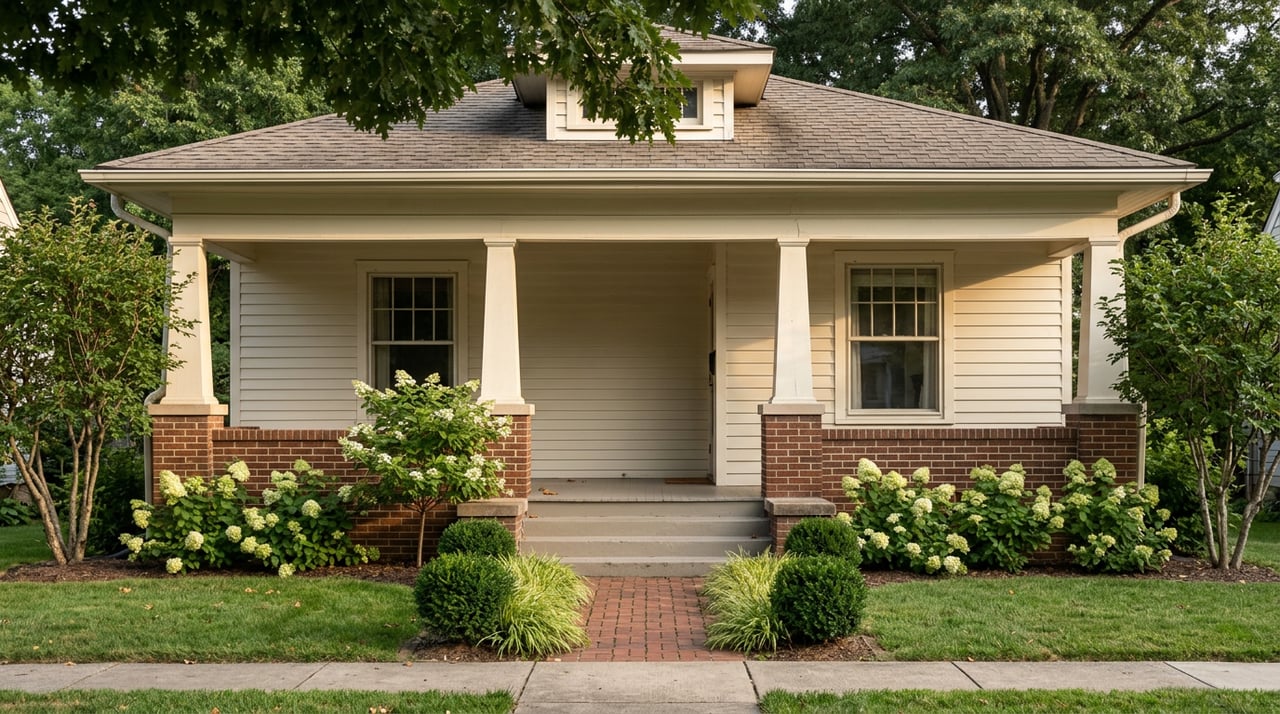
Oak Park's historic districts are not interchangeable, and the differences matter for what you are buying and what a renovation will cost. The Frank Lloyd Wright-Prairie School of Architecture Historic District was designated in 1973 and is defined by its concentration of Prairie Style buildings, including 23 structures designed by Wright himself. The Ridgeland-Oak Park Historic District, designated a decade later in 1983, is Oak Park's largest historic district and reflects a wider architectural cross-section, from Victorian-era homes of the 1870s through Craftsman bungalows and American Foursquares.
| Frank Lloyd Wright District | Ridgeland-Oak Park District | |
|---|---|---|
| Designated | 1973 | 1983 |
| Character | Prairie Style concentration, 23 Wright designs | Broad architectural mix, 1870s to 1930s |
| Notable landmarks | Prairie School residences | Pleasant Home (George W. Maher, 1897), Unity Temple |
| Village staff study finding | Permitting outcomes comparable to non-historic areas | Same |
Both districts fall under the same Village ordinance, so the review process itself does not change based on which one you are buying into. What changes is the age and construction of what you are inheriting, and that shapes your rehab budget more than the district boundary does.
If 95 percent of projects clear at the staff level, the useful question for a buyer is what makes up the other 5 percent. A look at the Historic Preservation Commission's own public hearing agenda from January 2026 gives a concrete answer. The projects that required a formal Certificate of Appropriateness hearing that month included:
The pattern is consistent with the Village's own architectural review guidelines, which direct staff and the Commission to focus on demolition, new construction, and exterior alterations visible from the street, while routine repair and interior work generally do not require the same level of scrutiny. If your renovation plan involves a kitchen gut, updated mechanicals, or a repainted interior, none of that typically needs to go anywhere near the Commission. If it involves tearing down a garage, adding onto the back of the house, or touching a street-facing roofline, budget extra time for the process and expect it to be a public hearing rather than a staff sign-off.
That hearing process has its own mechanics worth knowing before you write an offer contingent on renovation plans. Once an application is filed, notice of the hearing date, time, and purpose has to go out by mail to every property owner within 250 feet of the site, and that notice has to go out between 15 and 30 days before the hearing itself. Build that window into any timeline you are giving a lender or a contractor.
The incentive side of owning in a historic district is where the bigger surprise sits. Illinois offers a Property Tax Assessment Freeze Program for owner-occupants who take on a substantial, approved rehabilitation of a certified historic residence. If your project's eligible costs exceed 25 percent of the assessor's fair market value of the property in the year the work began, and the work meets the Secretary of the Interior's Standards for Rehabilitation, the assessed value of the home gets frozen for eight years, then steps back up to market level gradually over the following four years.
Eligible costs are broader than people assume. They cover new roofs, tuckpointing, window repair, mechanical and electrical upgrades, kitchen and bath work, and even new additions or detached garages, whether or not those additions are historic themselves. Given that roughly a third of Oak Park's housing stock sits inside one of its historic districts, you would expect wide adoption. Instead, Oak Park Township Assessor Ali ElSaffar has said that only a couple hundred properties in the village have historically carried the freeze at any given time, and that Cook County's own administration of the program has at times been inconsistent enough to frustrate homeowners who did everything right on paperwork. The freeze does not automatically transfer to a new owner either. If you are buying a home mid-rehab from an investor, the seller can complete the state's Part 1 and Part 2 approval and hand you an unsigned Part 3, but you have to finish that submission yourself as the new owner-occupant to actually receive the freeze.
For a buyer weighing a fixer against a move-in-ready home at a similar price, this freeze is the kind of detail that changes the math, and it is worth raising with your lender and your accountant before you assume a gut renovation is simply a cost with no offset.
That tax question lands differently in 2026 because Cook County just completed a reassessment cycle. The new assessments reflect property values as of January 1, 2026, and while the Assessor's office closed its own appeal window in June, a separate appeal period with the Cook County Board of Review opens later this year, with any change still not reaching tax bills until summer 2027. After the previous reassessment in 2023, about a third of Oak Park homeowners saw their tax bills go down, while roughly 40 percent saw double-digit increases. A rehabilitation project that qualifies for the historic freeze locks in your assessed value through this kind of volatility, which is a meaningfully different position than an owner outside a historic district faces heading into the same reassessment cycle.
None of this seems to be scaring buyers away from these blocks. Fixers in both districts continue to trade hands, and the friction buyers actually report has far more to do with estimating rehab costs and lining up financing than with clearing Village review. That tracks with what the Village's own study found this spring: the process is real, but it is narrow and predictable, and it rarely decides whether a renovation happens on schedule.
Does historic designation mean every repair needs Village sign-off? No. Most repair and interior work does not require Commission review at all, and the Village's own data shows 95 percent of applications inside the historic districts are approved by staff without a public hearing.
What kinds of projects actually go to a hearing? Demolition, new construction, and exterior alterations visible from the street are the categories that most consistently require a formal Certificate of Appropriateness hearing, based on recent Commission agendas.
If I buy a home mid-renovation, do I automatically get the tax freeze? No. The freeze does not transfer between owners automatically. A seller who started the rehabilitation can complete the state's initial approval steps and hand you the documentation, but you have to finish the final submission as the new owner-occupant.
Will I be forced to keep original materials like windows and siding? The Village's architectural guidelines direct owners toward repairing original materials rather than replacing them, and reviewers have historically pushed back on changes like vinyl siding that alter a house's original character. Routine in-kind repairs generally move through staff review without issue.
If you are weighing a historic-district fixer against a move-in-ready home elsewhere in Oak Park, or you own one and want a straight read on what a renovation would actually require before you list, ZK Group can walk through the specifics with you. Schedule a Consultation to talk through your property, your timeline, and what the numbers look like on both sides of the ledger.
Stay up to date on the latest real estate trends.


From the first consultation to closing, we are with you every step of the way. With deep local market knowledge, transparent communication, and an unwavering commitment to excellence.